
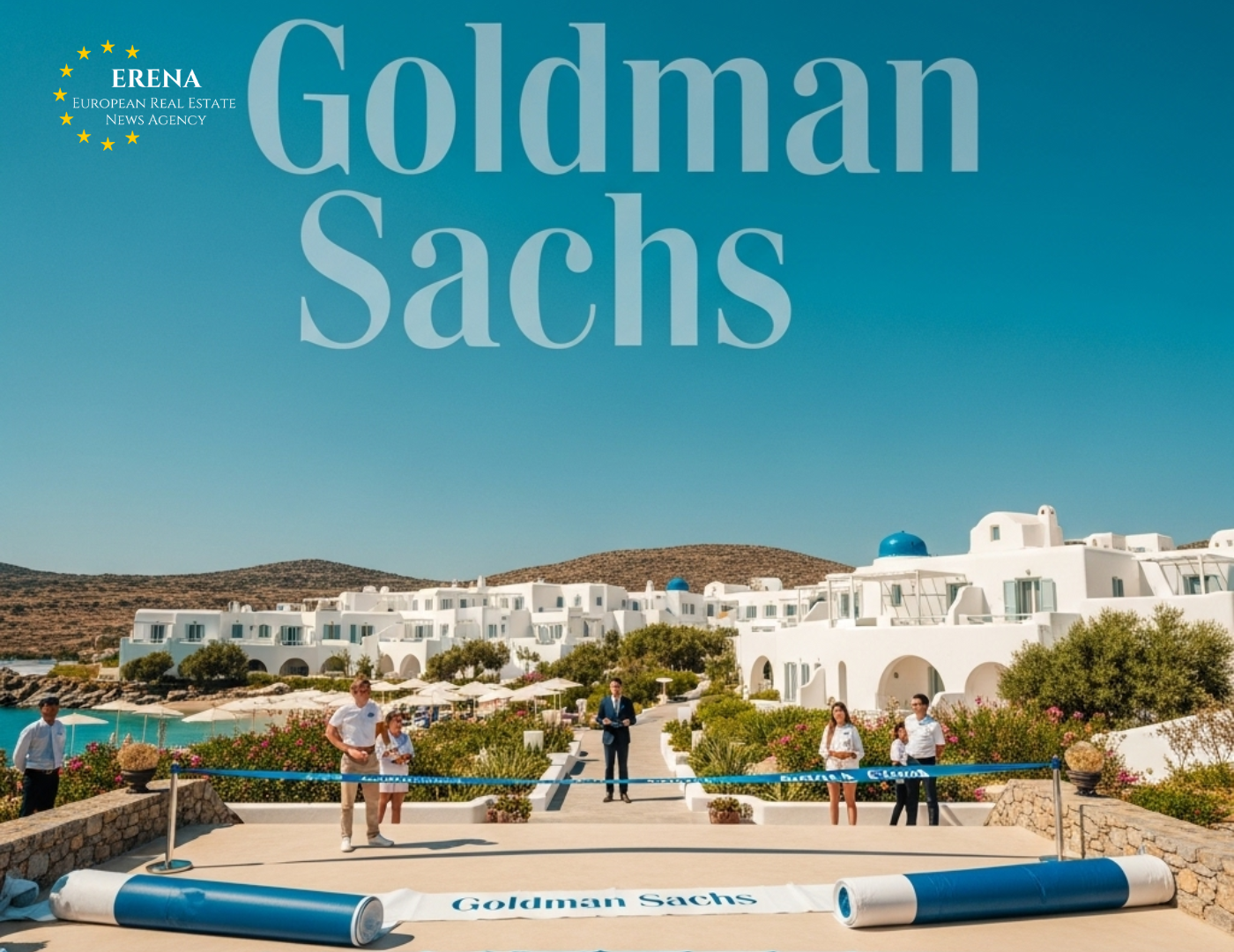
In a significant strategic shift, Goldman Sachs has decided to exit the Greek hotel market and cancel its much-anticipated plans to launch a proprietary hotel brand. The move comes amid mounting economic pressures, changing global investment priorities, and operational challenges in the post-pandemic tourism landscape.
This development marks a notable pivot for one of the world’s most influential investment banks, which had previously made substantial commitments in Greek tourism real estate with the goal of establishing a high-end hospitality footprint across the Aegean region.
Abandoning an Ambitious Vision
Goldman Sachs began exploring the Greek hospitality sector in 2022, acquiring a portfolio of premium assets across destinations like Mykonos, Santorini, Crete, and Athens. The bank reportedly invested close to €300 million into this initiative, with plans to create a sustainable and technology-forward luxury brand that would rival top-tier operators such as Aman Resorts and Six Senses.
The envisioned brand promised a fully digital guest experience, zero-emission facilities, and tailor-made wellness offerings, catering to affluent travelers seeking exclusivity, environmental consciousness, and innovation. However, by mid-2025, the plan had been shelved entirely.
Key Reasons Behind the Withdrawal
Several interlocking factors contributed to Goldman Sachs’ retreat:
- Economic uncertainty: The rising cost of capital and tightening financial conditions have significantly impacted the profitability of large-scale real estate ventures, especially in the hospitality sector.
- Operational complexity: Labor shortages, supply chain issues, and regulatory hurdles in Greece added layers of unpredictability to project execution.
- Market shifts: Changing traveler behavior, with growing demand for flexible accommodations such as luxury rentals and hybrid living-tourism models, has challenged traditional hotel formats.
- Geopolitical risk: Broader tensions in Eastern Europe and the Mediterranean region have led investors to prioritize safer and more stable jurisdictions.
Asset Sales Underway
Following the brand’s cancellation, Goldman Sachs has begun divesting its Greek hospitality holdings. Negotiations are ongoing with European private equity funds, regional hotel groups, and sovereign wealth funds. According to market analysts, the bank expects to recoup most of its initial investment—estimates suggest proceeds could range from €250 million to €280 million, depending on the condition and location of individual assets.
While properties requiring major redevelopment may trade at a discount, prime locations in central Athens and popular islands continue to attract strong interest.
Implications for the Greek Hospitality Sector
The bank’s departure serves as a reminder of the delicate balance between opportunity and risk in the Mediterranean’s hotel investment landscape. Greece remains one of Europe’s most attractive tourist destinations, with record arrivals and growing air connectivity. However, its hotel sector still faces structural hurdles, including long permitting processes, fragmented ownership, and insufficient infrastructure in some regions.
For the local industry, the exit could be a double-edged sword: while it removes a heavyweight investor from the playing field, it also creates room for smaller, more agile players to enter or expand their footprint.
What Happens to the Brand Idea?
Although the current iteration of Goldman Sachs’ hotel brand is now defunct, some industry experts speculate that the concept could be revived in a different region or through partnerships with existing operators. Southeast Asia—particularly Thailand, Indonesia, and Vietnam—has been mentioned as a potential new frontier for future hospitality investments by the firm.
Furthermore, as institutional focus increasingly shifts toward ESG-aligned assets, sustainable tourism will likely remain on the radar. Any future reentry would likely integrate lessons learned from the Greek experience, emphasizing flexibility and localization.
Industry Reactions
Reactions from within the hospitality sector have been mixed. The Hellenic Chamber of Hotels expressed confidence in the country’s long-term appeal:
“Greece continues to outperform as a tourist destination. Investment decisions by individual firms are not indicative of sector-wide problems but reflect their internal assessments,” said the Chamber in a statement.
Others, however, see this as a moment for introspection, urging the government to improve transparency in development approvals, reduce bureaucratic friction, and introduce targeted incentives to attract quality long-term capital.
A Reflection of Broader Trends
Goldman Sachs’ move mirrors a broader recalibration underway in global real estate. Faced with inflation, interest rate hikes, and unpredictable geopolitical events, institutional investors are reassessing their exposure to high-capex, long-horizon projects. Hospitality, particularly in emerging or recovering markets, is among the sectors under the most scrutiny.
The bank’s pivot underscores a growing preference for liquidity, optionality, and measurable ESG outcomes. It also highlights the increasing value of strategic partnerships with local operators who possess on-the-ground expertise.
Conclusion
Goldman Sachs’ exit from the Greek hotel market and the cancellation of its brand plans mark a strategic realignment rather than a failure. In an era of heightened uncertainty, even the largest players are becoming more selective, prioritizing flexibility and operational resilience over brand ambition.
While this move might dampen short-term optimism in Greece’s hospitality investment narrative, it opens the door for more targeted, adaptive approaches to tourism development. For the country’s real estate and travel sectors, the message is clear: future growth must be grounded in realistic planning, sustainability, and market responsiveness.