
Romania is preparing one of the boldest leisure investments in Europe: a one-billion-euro private project called Dracula Land, planned near Bucharest and positioned not as a single theme park but as a hybrid of entertainment, tourism, retail and digital production whose ambition is to convert the country most exportable myth into a durable economic engine capable of pulling visitors, talent and capital into Romania rather than letting those flows bypass it for more established destinations.
Earlier public debates around the commercial use of the Dracula brand in Romania have often been politically and culturally sensitive, which makes the current initiative both cautious in tone and ambitious in scope, because what is being proposed now is not a novelty attraction but infrastructure that touches tourism, labour markets, transport systems, housing demand, digital industries and public governance at the same time.
From folklore to infrastructure
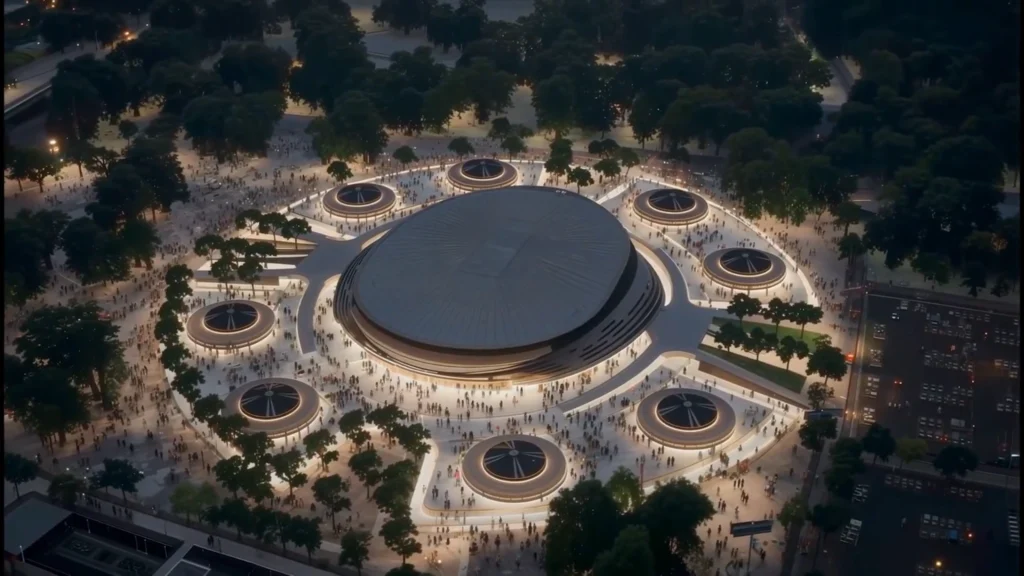
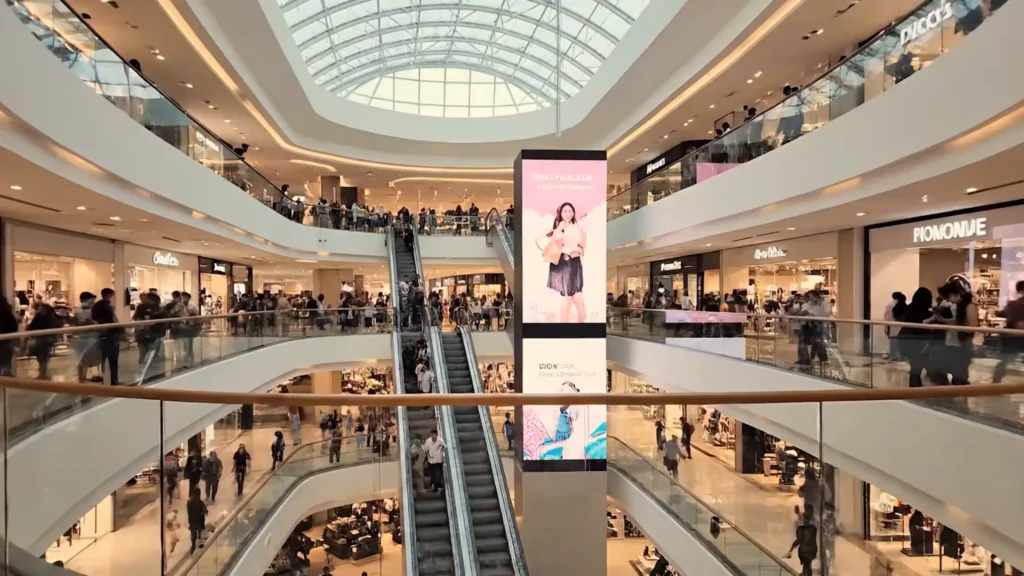
At the physical core of Dracula Land is a theme park footprint of roughly 780,000 square metres organised into six themed zones with more than forty attractions, surrounded by a much larger resort area of about 160 hectares that includes hotels, an arena, a spa complex, retail streets, entertainment venues and a technology hub, and this scale is not decorative but economic, because the project is structured as a multi-day destination rather than a single-day attraction in order to generate revenue from hotel stays, events, conferences, esports, retail and digital content alongside ride admissions and thereby reduce exposure to seasonal tourism cycles.
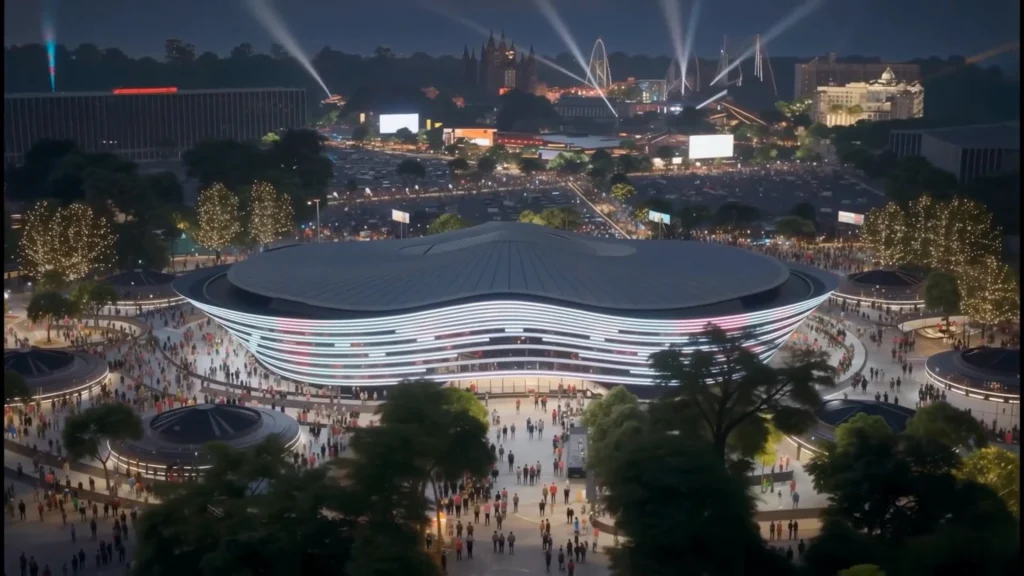
The central attraction, Dracula Castle, is planned as a dense narrative environment that combines roller-coaster systems, labyrinthine walkthroughs, interactive storytelling spaces, projection mapping, drone-based night shows and programmable lighting into a single architectural icon designed to function simultaneously as spectacle, content platform and brand anchor, while the broader design philosophy borrows from immersive theatre and gaming rather than traditional fairground engineering so that visitors experience the park as a persistent fictional world rather than a linear sequence of mechanical rides.
A park built as a digital platform
Unlike conventional parks, Dracula Land is being designed from the outset as a hybrid physical and digital environment in which a full digital twin built on real-time 3D engine technology is intended to simulate visitor flows, queue dynamics, emergency evacuation, weather impacts, energy use and noise propagation before construction is finished, and then to support operational planning and potentially real-time optimisation of lighting, sound, climate and security during operation, as well as to connect visitors to the park through personalised content, interactive storytelling and online events before and after their physical visit.
This effectively turns the park into part real estate asset, part software platform and part media business, expanding engagement and monetisation but also introducing a different risk profile, because software ages faster than concrete, requires continuous updates, cybersecurity protection, content refresh and specialised staff, and therefore transforms what would normally be a hospitality operation into a technology-intensive organisation whose long-term performance depends as much on digital governance and system reliability as on ride safety and service quality.
Economic promise and structural risks
The project is being designed around an initial volume of roughly three million visitors per year, a scale that would place Dracula Land among Romania largest tourist attractions and explains why the labour impact is measured not in hundreds but in thousands, with more than five thousand direct and indirect jobs projected across hospitality, security, maintenance, technology, events and management, meaning the park would function as a labour market in its own right that reshapes wage levels, skills demand and migration patterns in the surrounding region.
The promoters also estimate a cumulative economic impact on the order of five billion euros over the first decade of operation, a figure that reflects not only ticket and hotel revenue but secondary effects in transport, food services, retail, real estate and business travel, and which positions the project as a regional development engine rather than a standalone commercial venture.
At the same time, the economics are sensitive to factors beyond the control of the companies running the project, because tourism depends on discretionary spending, airline connectivity and geopolitical stability, while a one-billion-euro capital structure is likely to involve significant debt exposure that makes the project sensitive to interest-rate cycles and refinancing conditions, with financing costs feeding directly into pricing, phasing strategy and investment in maintenance and content renewal.
Infrastructure is another binding constraint, because a site designed for millions of visitors will require capacity upgrades in rail links, parking, traffic management, water supply, power generation, waste treatment and digital connectivity beyond what normal urban development provides, and without parallel public investment congestion, social resistance and environmental pressure could erode both political support and commercial performance.
How Dracula Land compares with Europe established mega parks
The ambition of Dracula Land becomes clearer when placed against Europe existing tourism flagships rather than viewed in isolation. Disneyland Paris remains the continent dominant destination, attracting more than ten million visitors in strong years and generating multi-billion-euro revenues through its tightly integrated ecosystem of parks, hotels, retail and entertainment, a level of scale that is far beyond what Romania developers are currently projecting and that illustrates how high the bar is for any new European mega-resort seeking continental relevance.
Europa-Park in Germany operates at a lower but still formidable scale of around six million visitors per year, supported by a dense network of hotels, a water park and extensive seasonal programming that smooths demand across the calendar. PortAventura World in Spain typically receives between three and four million visitors annually, placing it much closer to the range Dracula Land is targeting and making it a more realistic peer benchmark for a new entrant without a global brand franchise.
Seen in this context, a target of roughly three million visitors would position Dracula Land not as a continental leader but as a solid mid-tier European destination, comparable to PortAventura or Gardaland rather than to Disney or Europa-Park, which both grounds the project ambitions in market reality and highlights the competitive gap it would need to close over time if it hopes to evolve from a regional draw into a pan-European tourism anchor.
How it fits into Eastern Europe leisure expansion
The project also sits within a broader shift in Central and Eastern Europe, where countries such as Poland and Hungary have invested heavily in large-scale leisure infrastructure over the past decade. Poland Energylandia has grown from a local park into one of Europe most visited attractions by steadily expanding capacity and adding year-round offerings, while projects such as Suntago Water World have demonstrated that large indoor leisure formats can successfully overcome climate seasonality and attract international visitors.
In that sense Dracula Land represents Romania attempt to enter the same competitive space, using a globally recognisable narrative as its differentiator rather than relying purely on ride scale or price competition. Whether that narrative advantage proves strong enough to compensate for Romania later entry into the market and its smaller existing tourism base will largely determine whether Dracula Land becomes a regional landmark or remains a national curiosity.
A bet on Romania institutional capacity
Seen through this lens, Dracula Land is not only a private investment but a test of institutional coordination, because its success depends on whether planning authorities, transport agencies, environmental regulators, education systems, financial institutions and local governments can align around a project that cuts across all their mandates and requires predictable regulation, skilled labour supply, infrastructure investment and political stability over decades rather than election cycles.
In that sense the project is less about vampires and castles than about whether Romania can design, build and operate a complex, capital-intensive, technology-heavy tourism infrastructure to global standards and integrate it into its economic system without distortion or backlash, making Dracula Land as much an institutional experiment as a commercial one.
What this project really is
Dracula Land is therefore not simply a theme park but an attempt to convert culture into infrastructure and narrative into permanent economic function, and if it succeeds it could reposition Romania on the European tourism and investment map by creating a flagship destination of continental scale that anchors new travel flows, industries and skills, while if it falters it will not be because of the Dracula theme itself but because the country proves unable to sustain the financial, regulatory, operational and institutional complexity such a project requires over the long term.