

It is a common misconception that the United States bought the Virgin Islands from the Netherlands. In reality, in 1917 the US purchased the Danish West Indies from Denmark for US$25 million in gold, acquiring the islands of St Thomas, St John, and St Croix, which today form the US Virgin Islands in the Caribbean. At the time, the agreement was presented as a hard-headed and pragmatic wartime decision. Washington feared that Germany could seize or establish a naval base near vital Atlantic shipping routes and the Panama Canal.
More than a century later, the deal continues to surface in political debate — not because of its colonial character, but because of the strategic logic behind it. Questions of territory, security, and power that shaped the agreement in 1917 are again central to geopolitical discussions in 2026.
Recent reporting has clarified many details of the transaction. At the same time, an older falsehood has returned: the claim that Denmark’s final island sale involved what is now commonly called “Epstein Island.” It did not. The real history is simpler and more instructive, which matters because past decisions are repeatedly recycled — and often distorted — in contemporary geopolitical arguments.
What Denmark Actually Sold in 1917
Under the 1917 treaty, Denmark transferred three major islands with established port facilities, civil administration, and long-term military value in the Caribbean. The agreed price of 25 million gold coin was substantial by the standards of the time. Depending on calculation methods, its modern equivalent is approximately $630 million (≈ €540 million).

For the US government, the payment was never about land value or real-estate development potential. The overriding objective was to deny rival powers access to a maritime chokepoint of global military and economic significance at a moment when the First World War was reshaping strategic priorities. For Copenhagen, the price represented the liquidation value of a distant colony with limited remaining political relevance.
The diplomatic context was equally important. Alongside the sale, the US pledged not to oppose Denmark strengthening its political and economic position in Greenland. This link between a Caribbean territorial transfer and assurances related to Arctic security explains why the 1917 deal repeatedly resurfaces in modern discussions about Greenland’s strategic importance. The agreement was not merely a property transaction, but part of a broader geopolitical accommodation.
Why “Epstein Island” Is Unconnected to This Story
Until the transfer of the Danish West Indies in 1917, St Thomas was under Danish sovereignty. Little Saint James, a small island near St Thomas, did not involve any separate government-to-government transaction. Its change of jurisdiction occurred automatically as part of the broader territorial transfer.
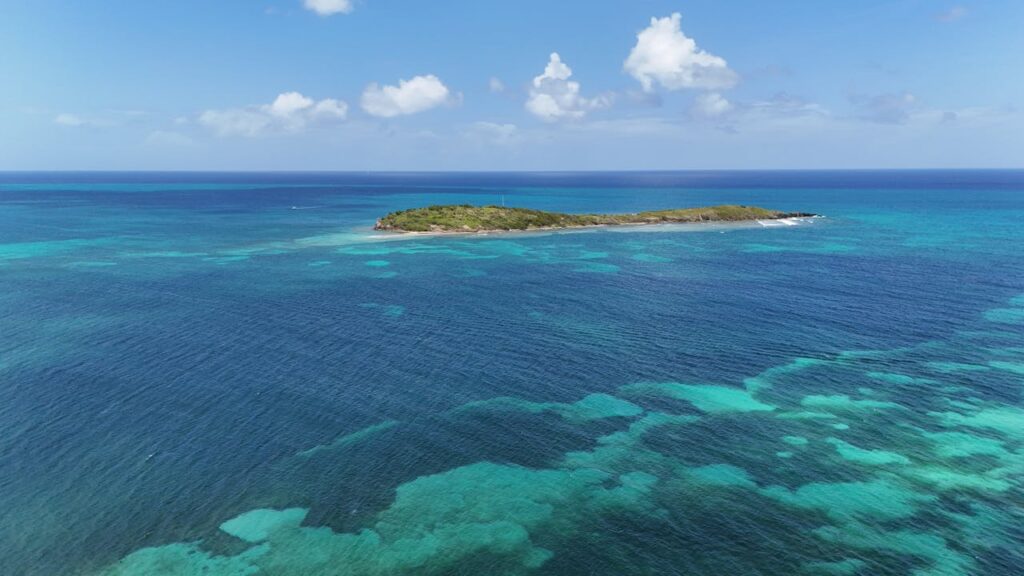
The island’s later notoriety has nothing to do with state affairs. It stems from private ownership and the criminal investigations associated with Jeffrey Epstein decades later. Following Epstein’s death, Little Saint James became a distressed luxury asset. In 2022, it was listed with an asking price of around $125 million (≈ €107 million), reflecting a combination of Caribbean trophy-asset pricing and reputational discounting. In 2023, reports indicated that Little Saint James and the neighbouring Great Saint James were sold together for approximately $60 million (≈ €51 million).
These were private real-estate transactions and should not be conflated with the 1917 territorial sale.
Why a Century-Old Agreement Matters Now
Among US territorial acquisitions, the purchase of the Danish West Indies stands out as one of the few modern examples of a direct transfer from a European power. As Arctic shipping routes, military infrastructure, and transatlantic security alignment increasingly dominate geopolitical scrutiny, historical parallels are being drawn with growing frequency.
The political and legal framework of the 1917 agreement cannot — and will not — be replicated in the twenty-first century. Yet the strategic logic behind it remains relevant. In 1917, the United States paid what would now amount to more than half a billion euros not for population, natural resources, or land mass — Denmark itself was far larger — but for location and long-term access.
It is this logic that keeps Greenland at the centre of global security debates. The reference is not to a potential sale, but to the enduring power of geography.
What Matters Most Today
The 1917 transaction was not about “Epstein Island” or a single Caribbean outpost. It concerned three strategically positioned islands sold for $25 million in gold, driven by security calculations rather than economic logic. Little Saint James was not part of that deal and has no connection to Denmark’s colonial divestment.
What matters today is not the myth, but the message. Denmark did sell islands for money, yet the price was small relative to their strategic value. That value lay in decades of access and influence. As the geopolitical realities of the twentieth and twenty-first centuries show, the logic behind the 1917 sale continues to resonate — not as history repeating itself, but as geography asserting its influence once again.