

When UKREiiF returns to Leeds on 19–21 May 2026, it will do so against a very different market backdrop from the post-rate-shock paralysis that defined much of the previous cycle. By early 2026, the UK real-estate conversation has shifted away from survival and towards structure. Price discovery is no longer the dominant theme; execution is. UKREiiF, designed as a national marketplace rather than a conventional conference, is positioning itself as the venue where that transition becomes tangible.
Hosted once again around Leeds Dock and the Royal Armouries, the forum arrives at a moment when capital is no longer frozen but remains selective. Investors are returning with tighter underwriting assumptions, local authorities are under pressure to demonstrate genuinely deliverable pipelines, and developers are rebuilding schemes around a more conservative capital stack. In that context, UKREiiF 2026 looks less like an industry showcase and more like a working platform for the next phase of the UK property cycle.
Pricing access to the market
The ticket structure itself signals confidence. Full-access passes for UKREiiF 2026 are priced at £1,095 plus VAT (≈€1,255) at early-bird stage, rising to £1,295 plus VAT (≈€1,485). Discounted rates for SMEs and local authorities start at £975 plus VAT (≈€1,118) before increasing to £1,095 plus VAT (≈€1,255). These are not symbolic fees. They reflect an assumption that access to the room has direct commercial value in a year when face-to-face engagement can replace months of fragmented deal sourcing.

Exhibition economics reinforce that view. In recent editions, stand packages ranged from roughly £6,000 (≈€7,100) for smaller footprints to more than £80,000 (≈€94,500) for premium positioning. Public-sector participation has also become increasingly formalised. Joint regional pavilions and coordinated investment showcases now come with defined budgets, often in the £40,000–50,000 range (≈€45,000–55,000) including VAT. Investment promotion is no longer treated as branding; it is being priced and managed as an economic-development tool.
From rate shock to capital discipline
The agenda for 2026 reflects a broader recalibration across UK property markets. Housing data through late 2025 and early 2026 points to stabilisation rather than renewed acceleration. Asking prices have flattened, affordability has marginally improved outside London, and transaction volumes have stopped falling sharply. In commercial real estate, the debate has moved decisively away from whether values will fall further and towards how assets can be financed under today’s conditions.
That shift is most visible in the renewed focus on debt. Senior lending, structured credit and refinancing solutions are shaping which assets trade and which schemes progress. Several large investment managers now argue that secured property loans offer wider spreads and stronger covenant protection than many corporate credit alternatives. This framing matters. It suggests the next UK property cycle may be led by debt rather than equity, with risk priced explicitly rather than assumed away.
Housing delivery returns as an economic issue
Housing remains the political and economic anchor of UKREiiF 2026. While affordability metrics have improved modestly, the structural shortage persists, and planning constraints continue to limit supply in high-demand regions. The difference in 2026 is the way housing is framed. It is no longer discussed solely as a social obligation but as an economic constraint affecting labour mobility, productivity and regional competitiveness.
At the forum, this reframing is likely to translate into more pragmatic discussions around phasing, tenure mix and infrastructure dependency. Affordable and mid-market housing schemes are increasingly presented alongside transport, utilities and energy upgrades rather than in isolation. For investors, housing without infrastructure is no longer financeable. For local authorities, infrastructure without committed housing volumes struggles to justify scale.
Infrastructure as the gating factor
If there is a unifying theme for UKREiiF 2026, it is infrastructure. Grid capacity, transport links and water resilience sit behind many of the UK’s stalled regeneration projects. UKREiiF’s combined focus on property and infrastructure gives it particular relevance at a time when funding decisions are increasingly interlinked.

In practice, infrastructure is expected to function less as a supporting narrative and more as the gating factor for investment. Panels and private meetings alike are likely to focus on sequencing: which investments unlock value first, which risks must remain public, and where private capital can realistically step in. For international investors assessing UK exposure, these discussions often provide a clearer picture of execution risk than headline pricing.
A cautious market that is moving again
UKREiiF 2026 will not be a euphoric event. The market it reflects remains cautious, shaped by higher financing costs and more demanding lenders. But it is no longer paralysed.
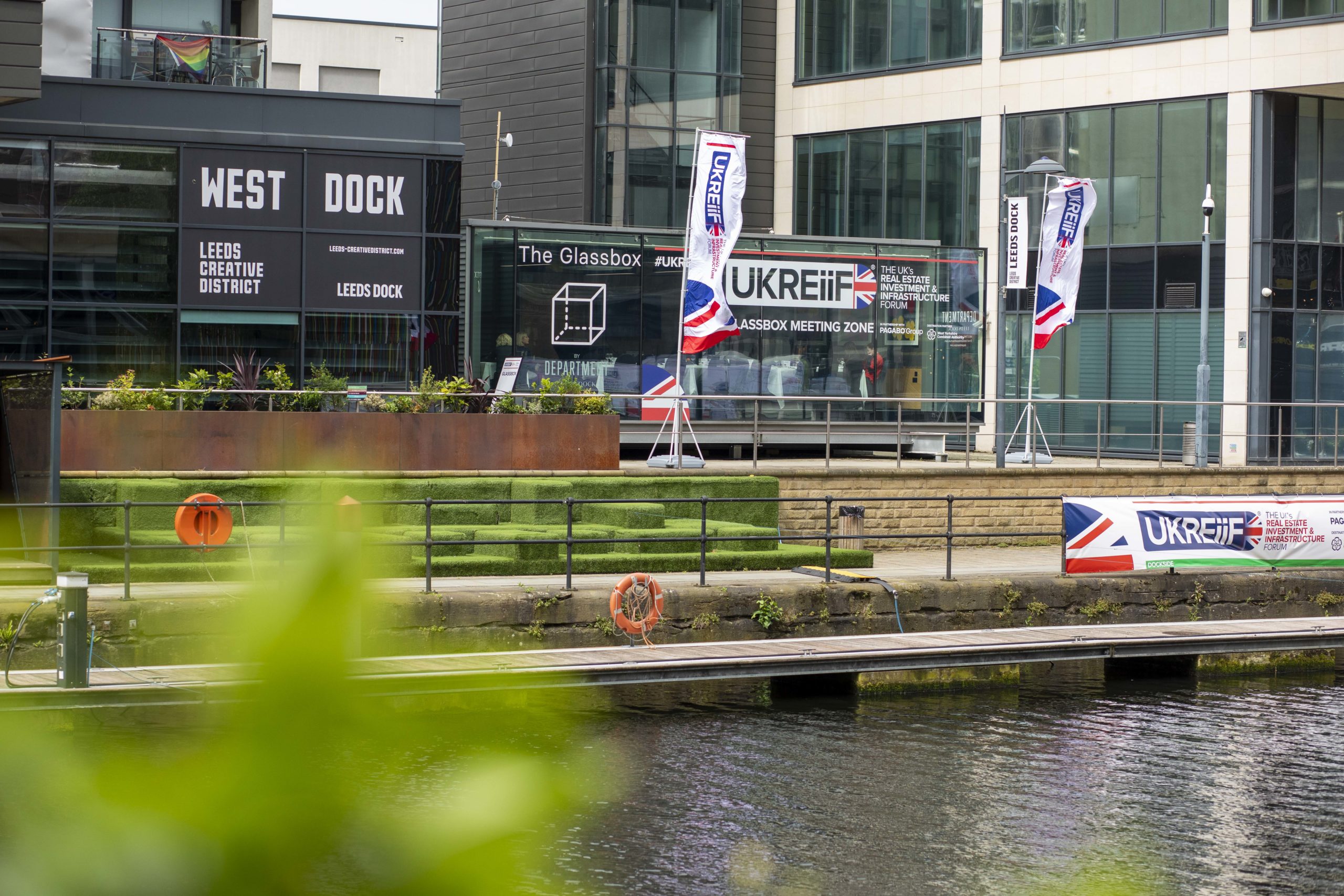
Capital is available, public-sector partners are active, and the emphasis has shifted from vision to deliverability. For participants, the value proposition is straightforward. The forum offers density rather than spectacle: three days in which investors, developers, planners and policymakers occupy the same space and negotiate in real time. In a market redefining risk and return, proximity itself has become an asset.
From Reset to Re-Engagement
UKREiiF 2026 arrives at a moment of recalibration rather than rebound. The UK property sector has moved beyond crisis management but has not returned to easy capital or permissive planning. That in-between phase is often where the most durable partnerships are formed, because expectations are realistic and incentives aligned. The pricing of access, the scale of public-sector engagement and the shift in agenda all point to a forum designed less to inspire and more to transact. For anyone seeking to understand how Britain’s next property cycle will actually be financed, Leeds in May 2026 is likely to provide unusually clear signals.