
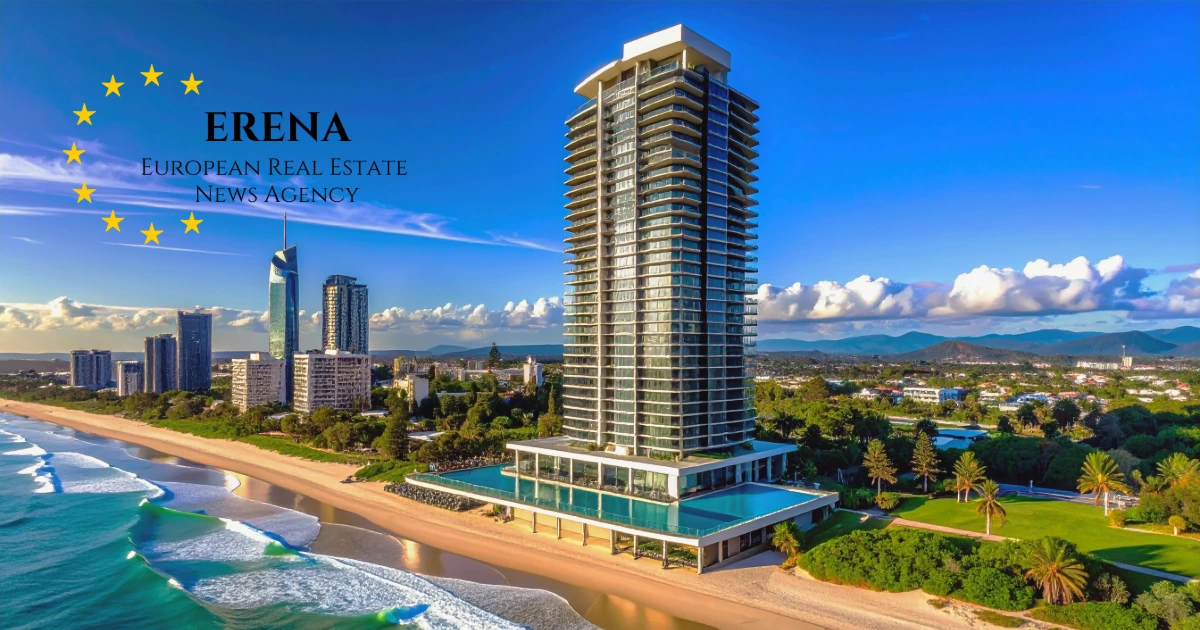
Construction has formally begun on the A$1 billion (≈€600 million) Palmera residential supertower in Surfers Paradise, marking one of the most high profile apartment starts on Australia’s Gold Coast in recent years. The 52 storey project is being delivered by Central Equity with Multiplex appointed as builder, signalling renewed developer confidence in a market that has spent the past two years recalibrating under higher interest rates and elevated construction costs.
Located on Garfield Terrace in the Northcliffe precinct, just south of the main Surfers Paradise strip, Palmera is positioned within one of the most tightly held beachfront corridors on the coast. For a skyline already defined by tall residential towers, the decision to proceed at full scale is less about height and more about timing. In a financing environment that remains restrictive, pressing the construction button on a billion dollar tower is itself a statement about capital conviction and presale traction.
A 52 Storey Beachfront Play in a Constrained Funding Cycle
Palmera will rise 52 storeys and deliver 347 residences on a consolidated site of roughly 3,200 square metres with dual frontage to Garfield Terrace and Frederick Street, adjacent to the Northcliffe Surf Life Saving Club and steps from a patrolled beach zone.
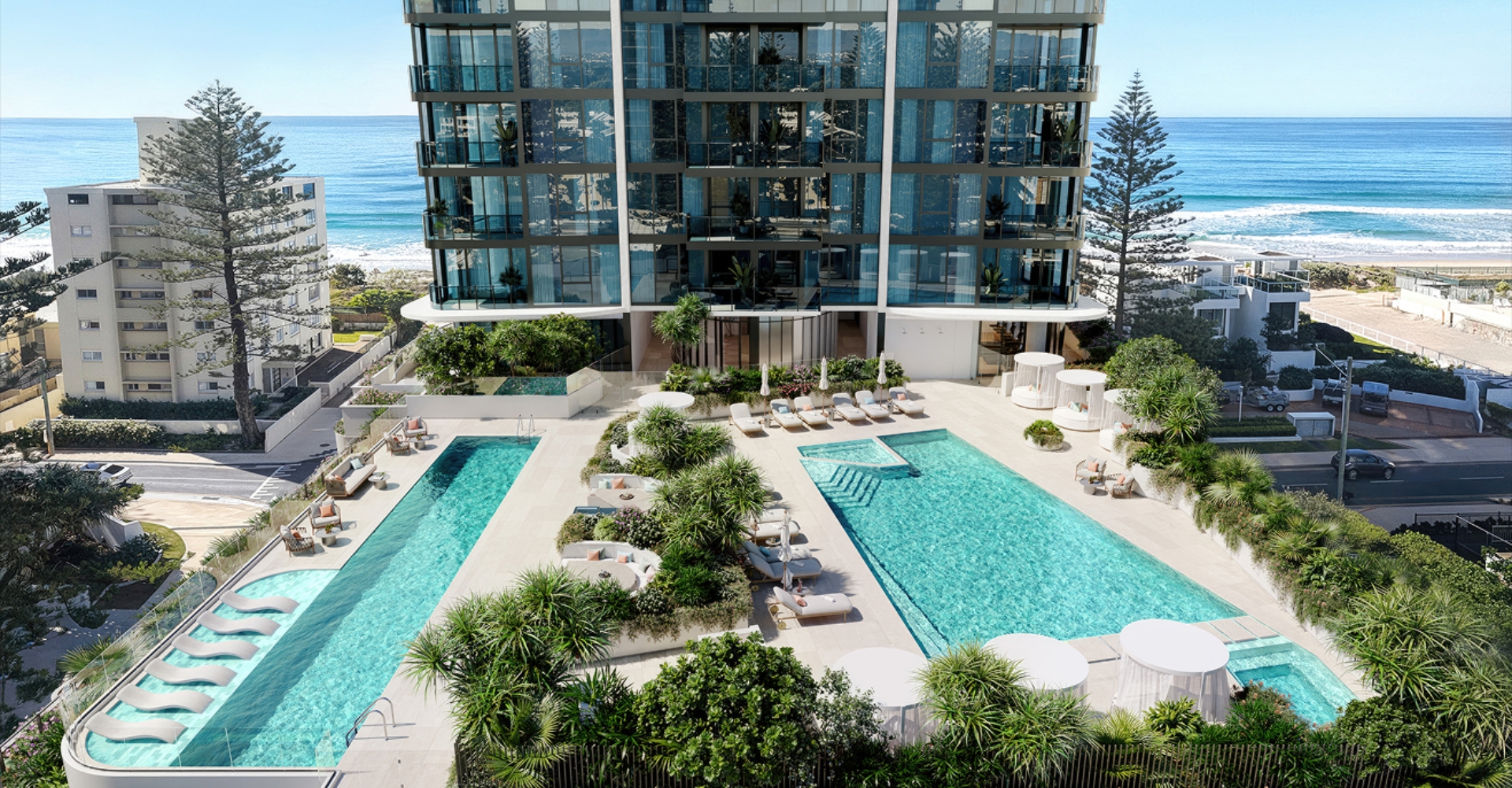
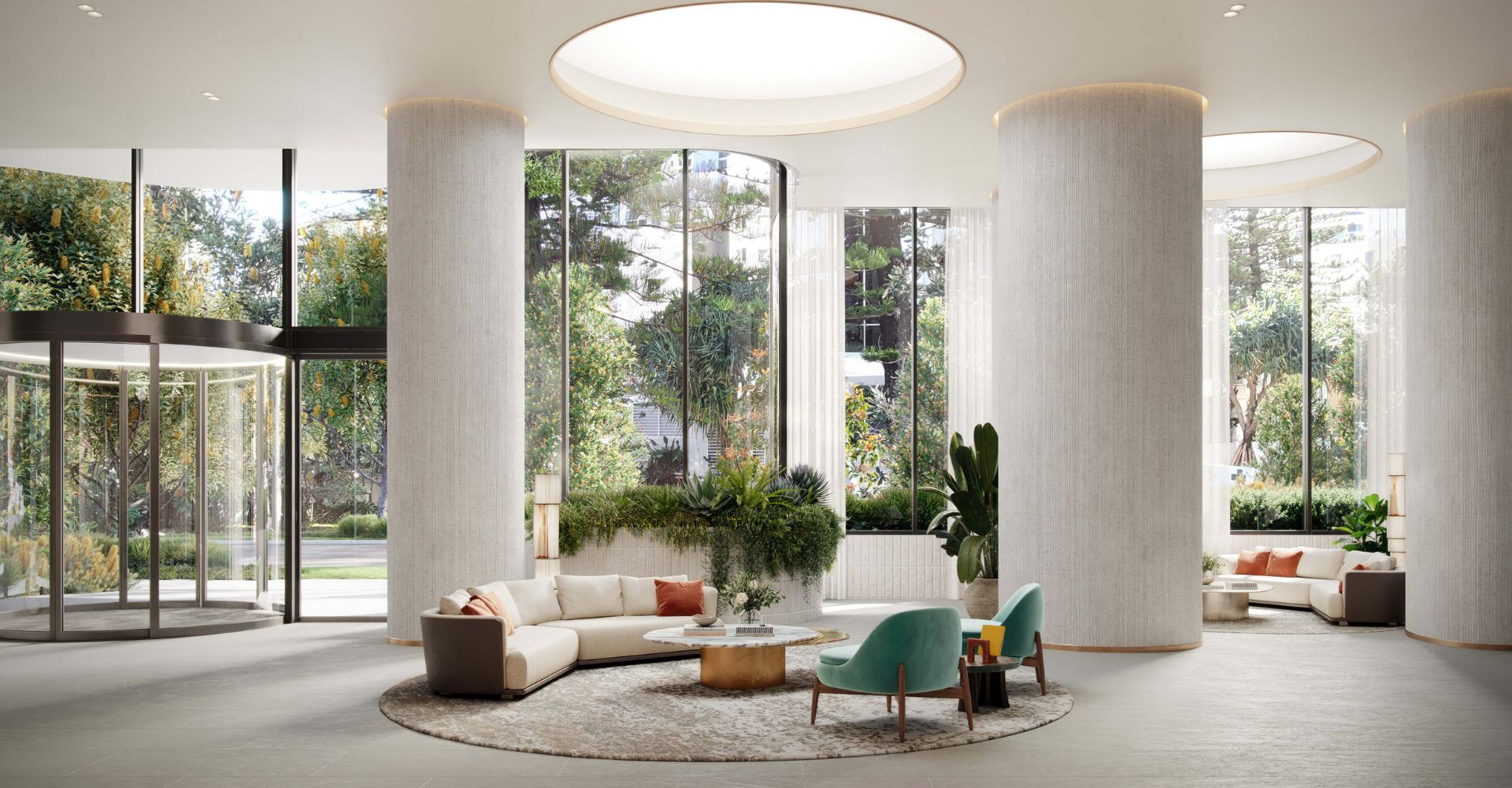
The architectural concept has been attributed to Marchese Partners with interiors by DBI, reinforcing its positioning in the high value segment of the local apartment market and targeting buyers seeking full frontage views and large format residences rather than compact investor stock. Australian apartment feasibility has been under sustained pressure from labour inflation, materials volatility and higher funding rates, leaving many schemes nationally paused at planning or presale stage.
Pricing Signals a High Net Worth Target Market
Public reporting has placed upper level skyhomes and penthouses in the A$3.5 million to A$5.8 million range (≈€2.1 million to ≈€3.5 million), anchoring Palmera firmly in the upper bracket rather than the mainstream owner occupier segment. At those levels, the buyer pool is typically less rate sensitive and more driven by equity wealth, inter state migration and lifestyle repositioning, particularly among downsizers and high net worth households seeking coastal exposure.
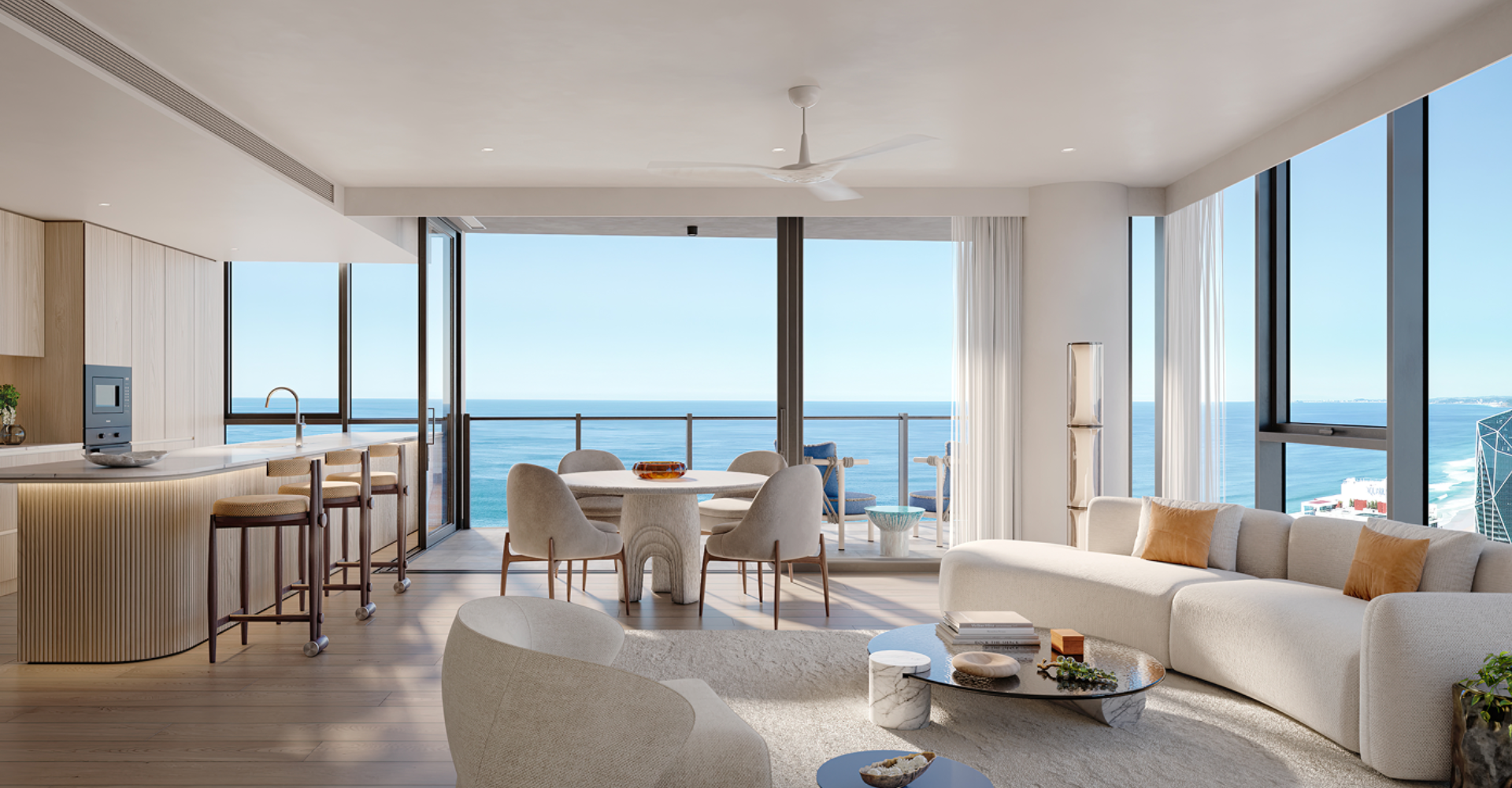
This pricing framework reframes the project’s risk profile. Palmera is not positioned as a broad housing supply response to affordability constraints but as a capital allocation play within a prestige coastal corridor that continues to compete with Sydney’s eastern suburbs and select international resort markets on relative value and amenity.
A Long Held Land Position Converts into Delivery
Central Equity reportedly began assembling holdings on Garfield Terrace as early as 2007, consolidating titles over many years before advancing the current version of the scheme, which secured development approval in 2025 after earlier concepts were paused during previous market cycles.
Such a prolonged land strategy reduces acquisition volatility and allows timing flexibility, effectively transforming the site into a long term option that can be exercised when feasibility metrics align. That sequencing is significant because it positions Palmera less as a speculative cycle peak launch and more as the monetisation of a patient land bank. In a market where many developers are constrained by short term capital costs, legacy land positions can materially shift project economics once construction costs stabilise and presales reach critical mass.
Confidence Signals from Developer and Builder
In commentary linked to the construction start, Central Equity executive director Karl Kutner described the Gold Coast as resilient and dynamic, framing the tower as a long term investment in a region supported by sustained population growth and lifestyle demand. From the contractor side, Multiplex regional managing director Michael Sinclair characterised the project as a skyline defining addition and emphasised delivery capability on a complex high rise scheme, reinforcing institutional confidence around execution.
Such remarks inevitably serve promotional purposes, yet they also articulate the core thesis underpinning the project: that prime beachfront real estate on the Gold Coast remains structurally supported despite tighter monetary settings and that well capitalised developers can still progress large scale vertical projects in selective micro locations.
Final Perspective
Ultimately, Palmera is more than another addition to the Surfers Paradise skyline; it is a billion dollar test of whether high end coastal demand can continue to absorb high rise supply in a higher rate environment where feasibility margins are thinner and buyer psychology is more selective, and if absorption remains steady at the A$3.5 million plus level (≈€2.1 million), the project may not only validate Central Equity’s long held land strategy but also signal a broader reopening of the apartment pipeline along Australia’s east coast.