
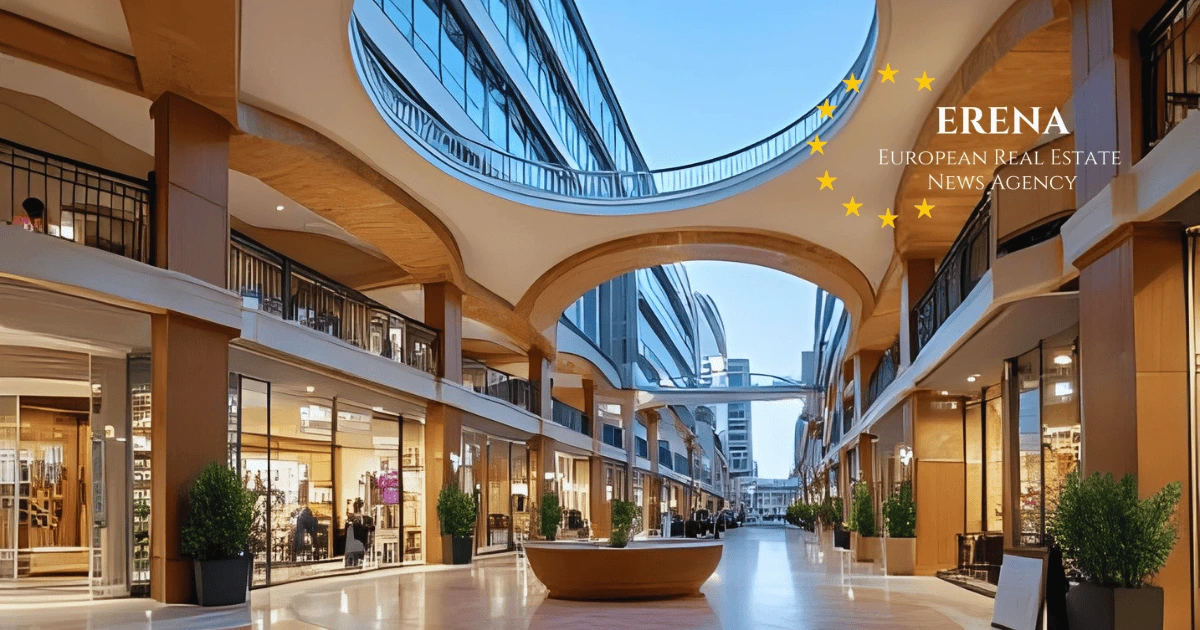
Dubai is preparing another shock to global retail with Dubai Square Mall, a planned 2.6-million-square-metre indoor city in Dubai Creek Harbour backed by an estimated investment of 180 billion dirhams — roughly $49 billion (≈46 billion euros). If delivered as announced, it will become one of the most expensive and ambitious retail real-estate projects ever undertaken in the region.
A Mega Mall Three Times the Size of Downtown Dubai
According to Emaar founder Mohamed Alabbar, Dubai Square Mall is under construction and expected to open in phases around 2028. Alabbar describes the scheme as being “around three times the size of Downtown Dubai,” while the development itself is planned as a 2.6-million-square-metre indoor city spanning retail, hospitality and residential components.

The budget alone illustrates the ambition. A capital cost of nearly $50 billion (≈46 billion euros) equates to roughly 69,000 AED per square metre of built area, or about $18,900 (≈17,500 euros) per square metre. This places Dubai Square far above traditional retail developments in the region and positions it among ultra-high-spec mega-projects where design, materials, digital systems and infrastructure drive costs into new territory.
An Indoor City Instead of a Conventional Mall
Developers describe Dubai Square not simply as a shopping centre but as a complete indoor metropolis. Plans feature flagship stores, themed retail districts, cultural venues, gaming and digital attractions, wide food and beverage boulevards, event arenas and indoor public squares designed to feel like open city streets under a climate-controlled roof.
Natural light will play a larger role than in previous malls, with skylights, glass façades and wide open spaces intended to reduce the feeling of enclosure. The project also integrates advanced immersive technology — from AR-enhanced retail environments to digital art installations — and next-generation store formats built around interaction rather than inventory.
Recent developer briefings have highlighted the use of AI-assisted management systems that will shape footfall flows, tenant mix and operations, using insights drawn from Dubai Mall and similar assets. For visitors, this could translate into personalised navigation, real-time crowd management and integrated digital services.
Mobility EV Access and Smart Infrastructure
One of the headline innovations is the ability for electric vehicles to move through designated internal lanes within the mall. The concept creates a hybrid pedestrian-and-vehicle environment that is rare in global retail design. It reflects Dubai’s ongoing commitment to EV mobility and adds a level of convenience aimed at both residents and high-spending tourists.

Smart infrastructure will underpin much of the mall’s daily operations. Emaar has indicated that Dubai Square will incorporate predictive analytics, automation and AI-driven logistics to create a seamless visitor experience. These systems are expected to manage everything from energy consumption to visitor flows, helping optimise peak traffic and reduce operational inefficiencies.
Prices Rents and the Value Proposition
Emaar has not released official leasing prices for Dubai Square Mall, but the investment scale provides strong indications. Premium rents are expected for flagship zones and high-visibility corridors, particularly those integrated with entertainment or hospitality functions. Dubai’s prime retail markets already operate on elevated rent models tied to turnover, and Dubai Square’s positioning suggests that brands seeking placement there will require substantial commitments both in leasing and in fit-out.
Market observers point out that with an implied capital cost per square metre significantly higher than in existing malls, rental rates are likely to reflect the project’s status as a regional showpiece. The value proposition for tenants will be based on exposure to a massive, curated visitor base within a globally marketed lifestyle district.
Competing in a Region of Mega-Projects
Dubai’s retail landscape remains intensely competitive. Dubai Mall continues expanding with additional luxury districts and new entertainment uses. Mall of the Emirates is undergoing a $1.3 billion (≈1.2 billion euros) redevelopment to reposition itself for the next decade, adding more than 20,000 square metres of additional space and around 100 stores.
Regionally, Dubai Square competes in scale with the world’s largest complexes. Iran Mall, at nearly 1.95 million square metres, remains one of the world’s biggest, but Dubai Square aims to redefine the category by merging mobility, technology and leisure into a single indoor ecosystem rather than focusing purely on footprint.
A Strategic Anchor for Dubai Creek Harbour
Dubai Square is central to the multi-billion-dollar redevelopment of Dubai Creek Harbour. The district includes waterfront towers, hotels, green promenades and cultural infrastructure, with the mall serving as the district’s main anchor and economic engine.
Connectivity will be strengthened through Dubai Metro’s upcoming Blue Line, a roughly Dh18–20.5 billion project scheduled to open in 2029. Its tallest station — located at Dubai Creek Harbour — will sit directly beside Dubai Square, providing high-capacity transit access and supporting the mall’s projected footfall.
What Analysts Are Watching
Local real-estate analysts describe Dubai Square as a high-risk, high-reward undertaking. Its scale and technology requirements assume continuous growth in tourism, luxury retail demand and high-income residency over the next decade. While early sentiment is positive, independent financial projections remain limited. Most publicly available assessments come from Emaar statements or brokerage commentary rather than from detailed, data-driven forecasts.
Key questions involve delivery timelines, the ability to attract major global brands and the long-term sustainability of visitor numbers. The region’s retail sector is competitive, and Dubai Square will need to differentiate itself not only through size but through experience, technology and convenience.
Final Perspectives
Dubai Square Mall embodies Dubai’s most ambitious urban-development mindset: large-scale, technology-driven and designed to blend entertainment, mobility and retail into one continuous indoor city. With an estimated $49 billion (≈46 billion euros) budget and a 2.6-million-square-metre footprint, the project aims to reposition what a shopping destination can be in the 21st century.
Success will depend on execution, global brand participation and the region’s tourism performance. But as a vision of the future of experiential retail, Dubai Square is already one of the most closely watched developments in the Gulf — a project that could redefine how people shop, move and spend time in purpose-built indoor environments.